
October 1, 2026 / 8 min read
Best Agentic Ai Vs Ai Agents in 2026 (Compared)
Compare the best Agentic Ai Vs Ai Agents options. We break down features, pricing, and use cases to help you choose. See the full comparison.

Best Agentic Ai Vs Ai Agents in 2026 (Compared)
Agentic AI refers to systems that plan, decide. and execute multi-step tasks with minimal human intervention. AI agents are the individual units that perform specific actions within those systems. The difference matters when you are choosing software for customer support, sales automation. or operations. Agentic AI orchestrates. AI agents execute. Most buying decisions come down to whether you need a single-purpose bot or a coordinated system that handles complex workflows end to end.
The confusion between these terms costs teams real money. Merchants buy standalone chatbots expecting autonomous problem-solving. Enterprise teams deploy agentic platforms but lack the data infrastructure to feed them. This guide breaks down what each approach actually does, where each fails. and how to match the right architecture to your use case.
Why the Distinction Matters
The practical difference shows up in three areas: scope of decision-making, failure modes. and total cost of ownership.
A standard AI agent handles a defined task. It answers a question, routes a ticket. or qualifies a lead based on rules you set. It does not decide what task to do next. It does not learn from the outcome of previous tasks to change its behavior on future ones. Think of it as a skilled employee who follows a playbook.
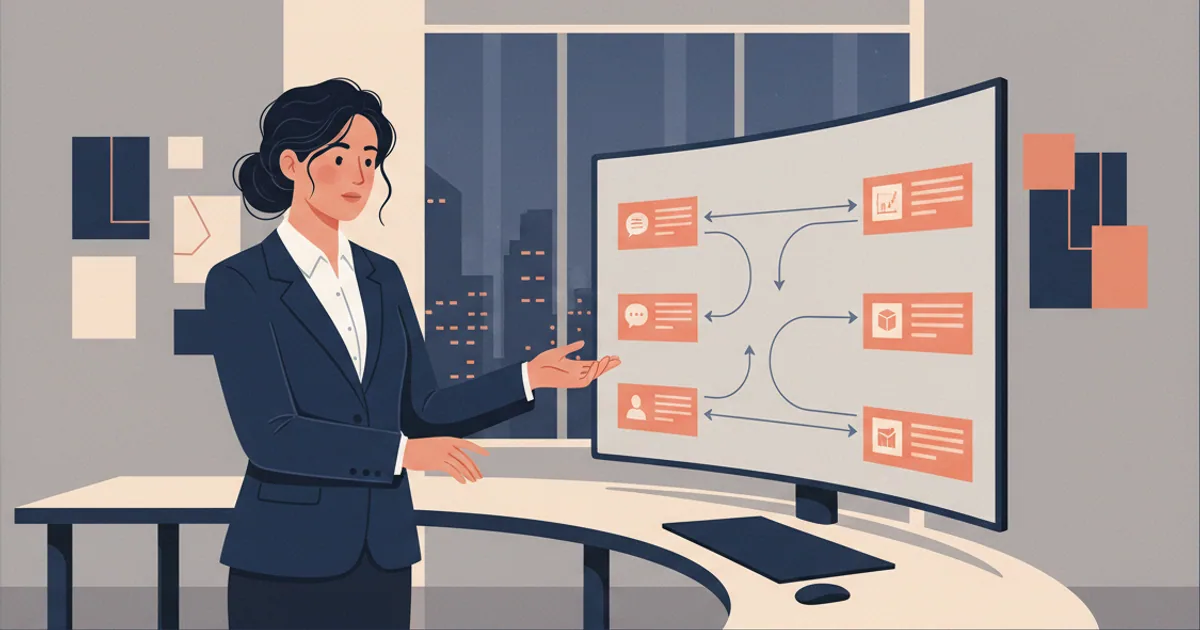
Agentic AI coordinates multiple agents and decides which one to activate based on context. It can break a complex request into subtasks, assign each subtask to the right agent. monitor progress. and adjust the plan when something fails. Think of it as a manager who delegates, tracks. and intervenes.
For a small e-commerce store handling 200 support tickets per week, a single AI sales agent that answers pricing questions and routes complex issues to a human is probably enough. The ROI comes from speed and consistency, not from autonomous planning.
For a multi-brand retailer managing inventory, returns. loyalty programs. and customer complaints across five Telegram channels. email. and web chat. a single-purpose agent cannot keep up. You need a system that understands when a refund request also triggers an inventory update, a loyalty point adjustment. and a follow-up message. That is where agentic AI earns its cost.
Evidence block: Gartner's 2024 Hype Cycle for Artificial Intelligence lists agentic AI as a distinct category from conversational AI agents, noting that agentic systems require "goal decomposition, tool use, and iterative reasoning" that standard agents lack. Source: Gartner Hype Cycle for AI 2024
The cost difference is real. Agentic platforms charge for orchestration complexity. You pay for the planning layer, the memory layer. and the tool integrations. AI agents charge per interaction or per seat. If your workflows are linear, you are overpaying for agentic. If your workflows branch and loop, you are underpaying for agents and losing money on manual handoffs.
How They Work in Practice
A customer sends a Telegram message: "I ordered the blue jacket last week but got the wrong size. Can I exchange it and use my 10% loyalty discount on the replacement?"
A standard AI agent trained on your FAQ can answer questions about exchange policies. It can tell the customer how to initiate a return. It cannot check the order history, verify the loyalty balance. calculate the new total. and create the exchange order in one conversation. It will either hallucinate an answer or escalate to a human.
An agentic system breaks the request into subtasks. First, retrieve the order from your e-commerce backend. Second, check the return eligibility window. Third, verify the loyalty discount balance. Fourth, calculate the price difference. Fifth, create the exchange order. Sixth, send confirmation. Each subtask might be handled by a different agent or tool. The orchestration layer sequences them and handles failures.
This is where RAG architecture becomes critical. Agentic systems need verified facts to plan correctly. If the system cannot retrieve accurate inventory data, it will generate a plan based on outdated information. The result is a confident but wrong answer.
The implementation complexity scales with the number of tools the agentic system needs to call. A system that only needs to query a knowledge base and send messages is lightweight. A system that needs to write to your CRM, update your inventory. process payments. and trigger email sequences requires careful permission design and error handling.
Most teams underestimate the data hygiene requirement. Agentic AI is only as good as the APIs and databases it can access. If your order management system has inconsistent product IDs, the agent will fail on lookups. If your CRM has duplicate customer records, the agent will pull the wrong history.
Tradeoffs Before Choosing

The decision is not "which is better." It is "which fits your current infrastructure and growth trajectory."
Control vs. autonomy. AI agents give you tight control. You define the rules, the escalation triggers. and the response templates. Agentic AI requires you to trust the planning layer. You set goals and constraints, not step-by-step instructions. Teams with strict compliance requirements often prefer agents because the audit trail is clearer.
Setup time vs. flexibility. A well-configured AI agent can go live in days. Agentic systems require mapping your workflows, connecting your tools. and testing edge cases. The setup cost is higher. The payoff is handling requests that would otherwise require three or four separate tools and manual coordination.
Cost structure. Agent pricing is usually predictable. You pay per seat, per message. or per resolution. Agentic pricing often includes compute costs for the planning layer, API call costs for tool integrations. and memory costs for context windows.
Failure modes. Agents fail by escalating or saying "I don't know." Agentic systems can fail mid-plan. They might complete three steps, fail on the fourth. and leave your data in an inconsistent state. Rollback logic matters. If your vendor does not explain how failed plans are handled, ask before you sign.
For merchants evaluating the best AI chatbot options, the honest answer is that most use cases in 2026 are still better served by well-configured agents with strong knowledge bases than by full agentic systems.
Where Both Usually Go Wrong
The most common failure is mismatched expectations. Teams buy agentic platforms expecting magic. They do not invest in the data layer. The system hallucinates because it cannot retrieve facts. They blame the AI when the real problem is their knowledge base.
Second failure: underestimating the human-in-the-loop requirement. Even sophisticated agentic systems need escalation paths. They need humans to review edge cases, approve high-stakes actions. and correct mistakes.
Third failure: choosing complexity for its own sake. A founder running a small boutique does not need an agentic orchestration layer. A single agent that answers product questions, confirms orders. and routes complaints to a human inbox covers 90% of the workload.
Fourth failure: ignoring hallucination risk. Standard agents hallucinate when they lack grounding data. Agentic systems hallucinate when their planning layer makes assumptions about tool capabilities or data availability. The fix is the same: a verified knowledge base that the AI must cite.
Teams evaluating AI tools should ask vendors a direct question: "What happens when the AI does not know the answer?" The answer tells you whether you are buying a hallucination machine or a system with guardrails.
Frequently Asked Questions
What is the main difference between agentic AI and AI agents?
AI agents perform specific tasks based on defined rules or prompts. Agentic AI orchestrates multiple agents, plans multi-step workflows. and adjusts its approach based on outcomes. An agent answers a question. Agentic AI decides which questions to answer, in what order. and what to do if an answer fails.
When should a small business use AI agents instead of agentic AI?
Most small businesses benefit more from AI agents in 2026. If your support requests are predictable and your workflows are linear, a single agent with a strong knowledge base handles the load at lower cost. Agentic AI makes sense when you need to coordinate multiple systems or automate processes that currently require several tools and manual handoffs.
How do I prevent hallucinations in agentic AI systems?
Hallucinations happen when the AI lacks verified facts or when the planning layer makes assumptions. The fix is grounding every response in a structured knowledge base. RAG architecture retrieves relevant documents before the AI generates an answer. Ask any vendor how their system handles unknown questions before you buy.
Can I start with AI agents and upgrade to agentic AI later?
Yes. Many teams start with a single-purpose agent for FAQ handling or lead qualification, then expand as their data infrastructure matures. Look for vendors that offer standalone agents with a path to orchestration, not platforms that lock you into one architecture.
What does agentic AI cost compared to standard AI agents?
Agent pricing is usually per seat, per message. or per resolution. Agentic pricing includes compute for the planning layer, API calls for tool integrations. and memory for context windows. Expect agentic platforms to cost two to five times more than agents for equivalent message volume. For most free AI tools users, starting with agents is the smarter bet.