October 1, 2026 / 8 min read
AI Online Chat: What It Actually Does for Sales and Support…
AI online chat is software that reads customer messages, matches them against verified information. and writes replies without a human typing every word.…

AI Online Chat: What It Actually Does for Sales and Support in 2026
AI online chat is software that reads customer messages, matches them against verified information. and writes replies without a human typing every word. The technology sits on websites, messaging apps. and email inboxes. It answers questions about pricing, shipping. order status. and product details in seconds instead of hours. For merchants running lean teams, it means fewer lost leads and faster support resolution.
The phrase "AI online chat" covers a wide range of tools. Some are basic FAQ bots that match keywords to canned responses. Others are agentic systems that pull from knowledge bases, understand context across a conversation. and escalate when they hit a wall. The gap between these two categories determines whether the tool helps or frustrates your customers.
| Type | How It Works | Best For |
|---|---|---|
| Rule-based chatbot | Keyword matching to preset answers | Simple FAQs with predictable questions |
| RAG-powered agent | Retrieves from verified sources before generating | Product catalogs, policy questions, order lookups |
| Agentic AI | Plans multi-step actions, uses tools, escalates intelligently | Sales qualification, complex support tickets |
Understanding what is RAG in AI matters here. Retrieval-augmented generation grounds the AI's output in real documents instead of letting it guess.
Why AI Online Chat Matters

Response time kills deals. Most small teams cannot staff a chat window around the clock. AI fills the gap.
Evidence: Drift's 2023 State of Conversational Marketing report showed that businesses using AI chat saw a 67% increase in qualified leads captured outside business hours. Source
The value compounds for multilingual operations. A cosmetics seller in Dubai gets questions in Arabic, French. and English. Training human agents across three languages costs money. A properly configured AI agent handles all three from the same knowledge base.
AI online chat also changes the support math. Every repetitive question answered by AI frees an agent to handle complex cases. Order tracking, return policies. promo code questions. These eat hours every week. Automating them cuts average handling time without cutting headcount.
The risk is obvious. Bad AI chat creates friction. Customers who get wrong answers or robotic loops abandon carts. The technology only works when the underlying knowledge base is accurate and the system knows when to hand off.
For merchants comparing options, the best AI chatbot comparison breaks down which tools actually deliver on these promises.
How AI Online Chat Works in Practice
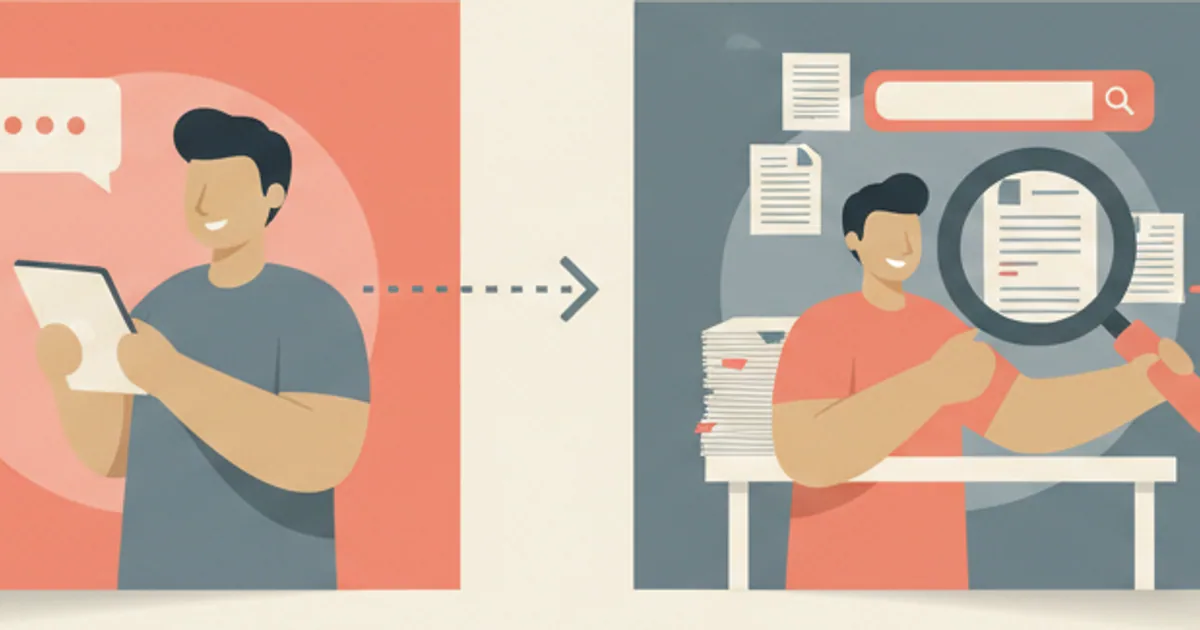
The mechanics matter more than the marketing.
Intent classification. The AI reads the incoming message and determines what the customer wants. Product question? Complaint? Shipping inquiry? Classification happens in milliseconds.
Retrieval. The system searches its knowledge base for relevant information. Instead of generating an answer from general training data, the AI pulls specific passages from your product catalog. FAQ documents. or policy pages.
Generation. The AI writes a response using the retrieved context. Good systems cite their sources internally so the answer stays grounded.
Confidence check. The system evaluates whether it can answer reliably. If confidence drops below a threshold, it escalates to a human agent instead of guessing. This step separates useful AI from hallucination machines.
Handoff or resolution. Simple questions get answered and closed. Complex cases route to a human inbox with full conversation history attached.
An AI sales agent follows this same flow but adds qualification logic. It asks discovery questions, captures lead details. and routes hot prospects to sales reps.
Teams building their own stack should understand what is agentic AI because true agent behavior requires planning, tool use. and memory across sessions.
Tradeoffs to Understand First

AI online chat is not free capability. Every benefit comes with a cost.
Speed versus accuracy. Fast responses impress customers. But speed means nothing if the answer is wrong. Systems that prioritize response time over retrieval quality generate hallucinations.
Automation versus trust. Customers tolerate AI for simple questions. They get frustrated when complex issues bounce between bot loops without resolution. A customer asking about a $20 t-shirt has different expectations than someone configuring a $5,000 software contract.
Setup cost versus ongoing maintenance. No-code tools promise quick deployment. The hidden cost is knowledge base curation. Your AI is only as good as the documents feeding it. Outdated product pages and conflicting information create bad answers.
Channel fragmentation. Customers reach out on website chat, Telegram. email. and Instagram DMs. Running separate AI tools for each channel creates inconsistent experiences. A unified inbox with one knowledge base solves this but requires more upfront integration.
The AI toolkit guide covers which components actually belong in a support stack.
Cost scaling. Most AI chat platforms charge by message volume or AI credits. High-traffic stores can see bills climb fast. Calculate cost per resolved ticket before committing.
Where AI Online Chat Usually Goes Wrong
Failures cluster around predictable mistakes.
Hallucination from thin knowledge bases. The AI invents answers when it cannot find relevant information. A clothing store uploads a homepage and expects the bot to answer sizing questions. The system generates plausible but incorrect measurements. Fix: upload complete product data and enable confidence thresholds that trigger human escalation.
Over-automation of sensitive cases. Refund disputes, damaged goods. and angry customers need human judgment. AI that attempts to resolve these cases with scripted responses escalates frustration. Fix: build explicit rules that route negative sentiment to human queues.
Language switching failures. A customer writes in Arabic, the bot responds in English. the customer clarifies in French. the bot hallucinates a mixed response. Fix: enforce language detection at the session level.
No context carryover. A customer asks three related questions. The AI treats each as a new conversation. The third answer contradicts the first. Fix: use systems with session memory.
Generic tone that sounds robotic. The goal is not to fool customers. The goal is to be helpful. Fix: train the AI on your actual support transcripts and adjust the tone prompt to match your brand voice.
The comparison between agentic AI vs AI agents clarifies which architectures handle these edge cases better.
An Operator's Take on AI Chat ROI
Most ROI projections for AI chat are garbage. They assume 100% deflection rates and ignore the cost of bad answers.
Here is a realistic frame. A support team handles 500 tickets per week. Half are repetitive questions that a well-trained AI can answer. Deflecting 250 tickets saves roughly 25 hours of agent time at five minutes per ticket. At $25 per hour, that is $625 per week or $32.500 per year.
The catch: getting to 50% reliable deflection requires serious knowledge base work. Budget 40 hours upfront to audit, clean. and organize your source documents. Budget two hours per week for ongoing maintenance.
The real win is not cost savings. It is speed. Customers who get answers in 10 seconds convert at higher rates than customers who wait 10 hours.
Teams exploring AI tools should evaluate chat products on deflection rate, escalation accuracy. and knowledge base flexibility. Ignore demos. Ask for customer references in your vertical.
Frequently Asked Questions
What is the difference between AI online chat and a regular chatbot?
Regular chatbots match keywords to preset responses. They cannot handle phrasing variations or questions outside their script. AI online chat uses language models to understand intent, retrieve information from a knowledge base. and generate contextual responses. The practical difference shows up when a customer asks the same question in three different ways. A keyword bot fails on two of them. An AI chat handles all three.
How much does AI online chat cost for a small e-commerce store?
Entry-level tools start at $30 to $50 per month with limited message credits. Mid-tier platforms run $100 to $300 per month with more channels and larger knowledge bases. High-volume stores may pay $500 or more. The hidden cost is setup time. Budget 20 to 60 hours depending on catalog size. The best free AI roundup covers which tools offer meaningful free tiers for testing.
Can AI online chat handle multiple languages at once?
Yes, but quality varies. Systems using large language models can process Arabic, French. English. Spanish. and dozens of other languages. The challenge is knowledge base coverage. If your product descriptions exist only in English, the AI may translate poorly or hallucinate details. Best practice: maintain source documents in each language you support.
When should AI online chat escalate to a human agent?
Escalation triggers should include low confidence scores, negative sentiment detection. explicit requests for a human. and specific keywords like "refund." "complaint." or "urgent." Good systems attach full conversation history to the handoff so the human agent has context.