July 27, 2026 / 8 min read
Best Best Ai Chatbot in 2026 (Compared)
Compare the best Best Ai Chatbot options. We break down features, pricing, and use cases to help you choose. See the full comparison.

Best Best Ai Chatbot in 2026 (Compared)
The best AI chatbot for most businesses right now is one that can pull answers from your actual company data without making things up. That rules out most general-purpose bots. For e-commerce and customer-facing teams, the shortlist comes down to Intercom Fin. Zendesk AI. Tidio. and Gawbni. Each serves different use cases. Intercom works well for SaaS with complex product questions. Zendesk suits enterprise support teams with existing ticketing workflows. Tidio fits small shops wanting quick setup. Gawbni targets multilingual merchants who need verified answers across chat, Telegram. and email without hallucination risk.
Your pick depends on three things: where your customers message you, what languages they speak. and how much you trust the bot to answer without human review.
Why Choosing the Right AI Chatbot Matters More Than Ever

A bad chatbot costs you twice. Once when it gives wrong information. Again when the customer leaves.
Evidence block: Gartner research shows that 64% of customers prefer companies that do not use AI for customer service when the AI performs poorly. The same study found that 53% would consider switching to a competitor after a bad AI interaction. Source: Gartner 2023 Customer Service Survey
The shift happened because GPT-powered chatbots became easy to deploy but hard to trust. Any developer can spin up a bot using OpenAI's API in an afternoon. Making that bot stick to verified product information without inventing shipping policies or fake promo codes is a different problem entirely.
For merchants handling pre-sale questions about pricing, availability. and shipping. wrong answers directly kill conversions. A customer asking "do you ship to Morocco?" needs a factual yes or no. A hallucinated "yes" followed by a failed checkout creates a refund request and a one-star review.
The "best" chatbot in 2026 is not the one with the most features. It is the one that knows what it does not know.
How AI Chatbots Actually Work in Practice
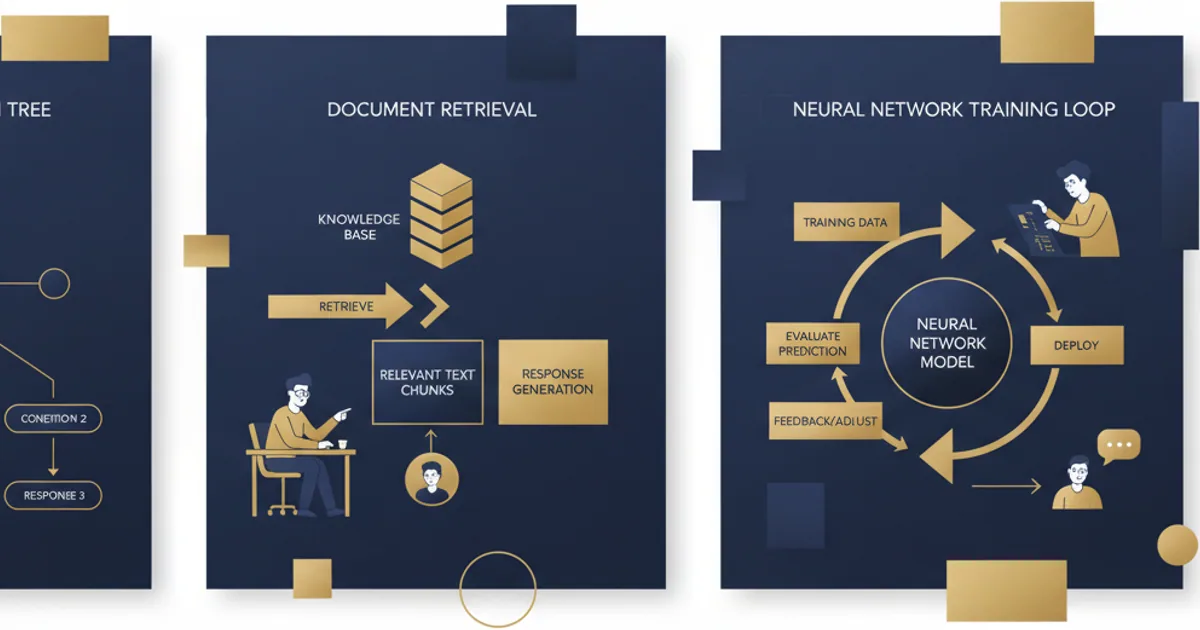
Understanding the mechanics helps you evaluate claims. Most AI chatbots fall into three categories.
Rule-based bots follow decision trees. You map out every possible question and answer. They never hallucinate because they never generate. The downside: they break on any question you did not anticipate.
RAG-based bots (Retrieval Augmented Generation) search your documents first, then generate answers using that context. This is where Intercom Fin, Zendesk AI. and Gawbni sit. The quality depends entirely on how well your knowledge base is structured and how strictly the model is constrained to that source material.
Pure LLM bots just send customer messages to GPT or Claude with a system prompt. Fast to deploy. Prone to confident fabrication. Fine for entertainment. Dangerous for commerce.
The practical difference shows up in edge cases. A RAG bot asked about a product you do not sell should say "I couldn't find information about that product." A pure LLM bot might invent specifications based on similar products it saw in training data.
For ai tools comparisons, the retrieval layer is the differentiator. Gawbni calls this a "Truth Layer" where PDFs, website pages. and text files become the only source the AI can reference. Intercom uses a similar approach with their "Fin AI" knowledge ingestion. Zendesk relies on existing help center articles.
The setup process matters too. Ask vendors what happens when you upload a 50-page PDF with inconsistent formatting. That answer tells you more than any demo.
Tradeoffs You Should Understand Before Committing
No AI chatbot does everything well. Here is what you are actually choosing between.
| Factor | Intercom Fin | Zendesk AI | Tidio | Gawbni |
|---|---|---|---|---|
| Best for | SaaS support teams | Enterprise ticketing | Small e-commerce | Multilingual merchants |
| Channels | Chat, email | Chat, email, phone | Chat, Instagram, Messenger | Chat, email, Telegram |
| Language support | 45+ languages | 30+ languages | 16 languages | Arabic, French, English |
| Knowledge source | Help center, custom docs | Help center articles | FAQ builder, custom | PDFs, DOCX, websites, text |
| Pricing model | Per resolution | Per agent seat | Per seat + AI credits | Channels + AI credits |
| Hallucination controls | Confidence scoring | Source attribution | Limited | Escalation on uncertainty |
Channel coverage versus depth. Intercom covers more channels but requires separate setup for each. Gawbni built Telegram support natively because their core users run sales through Telegram groups. If your customers live in WhatsApp, check whether the tool actually integrates or just promises it on a roadmap.
Multilingual quality versus breadth. Claiming "45+ languages" often means the bot can detect and respond in those languages. It does not mean the responses are good. Arabic support specifically requires right-to-left handling, dialect awareness. and cultural context that most US-built tools treat as an afterthought. If you sell to MENA markets, test Arabic responses before committing.
Pricing transparency. "Per resolution" sounds fair until you realize the vendor defines what counts as a resolution. "Per AI credit" sounds flexible until you see how fast credits burn on long conversations. Ask what a month of 500 conversations actually costs with your typical message length.
The best ai tools for your team depend on which tradeoff hurts least.
Where AI Chatbot Implementations Usually Go Wrong

Most chatbot failures are not technology problems. They are setup problems.
Problem one: feeding the bot garbage data. Teams dump their entire help center into the knowledge base without cleaning it first. The bot then confidently quotes outdated return policies from 2019 or contradictory shipping information from three different pages.
Problem two: no escalation path. Bots without clear handoff rules frustrate customers who need human help. Good tools detect uncertainty and escalate automatically. Gawbni and Intercom both have confidence thresholds that trigger human routing.
Problem three: treating the bot as set-and-forget. Customer questions evolve. Product catalogs change. A chatbot trained in January becomes progressively wrong by June if nobody updates the knowledge base. Schedule monthly reviews of what the bot could not answer.
Problem four: not testing in production conditions. Real customers ask questions with typos. They paste order numbers mid-sentence. They switch languages. Test with actual customer transcripts before going live.
For teams exploring ai sales agent use cases, the failure mode is different. Sales bots need to qualify leads without being annoying. Asking "what's your budget?" in the first message kills conversations.
When Gawbni Makes Sense (and When It Does Not)
Gawbni fits a specific profile. Merchants and support teams managing high volumes of repetitive questions across chat, email. and Telegram. Especially those serving Arabic, French. and English speakers.
The Truth Layer approach means you upload your actual business documents and the AI only answers from that material. No training on internet data. No invented policies. When the bot does not know something, it says so and routes to a human.
This works well for e-commerce stores handling "where is my order" and "do you have this in stock" questions. It works for import/export businesses fielding pricing inquiries across time zones.
It does not fit teams needing phone support. It does not fit companies requiring deep CRM integrations. It does not fit anyone who needs more than three languages.
Check free ai tools if you want to experiment before committing budget. Gawbni offers a free trial. So do Tidio and most competitors.
Frequently Asked Questions
What makes an AI chatbot "best" for e-commerce specifically?
E-commerce chatbots need three things generic bots lack. First, product catalog awareness so they can answer "is this available in size M" without guessing. Second, order status integration so they can tell customers where their package is. Third, accurate policy knowledge so they do not promise free returns when you charge restocking fees.
How do I prevent my AI chatbot from making up information?
Use tools with explicit knowledge boundaries. RAG-based systems like Intercom Fin, Zendesk AI. and Gawbni constrain the AI to answer only from documents you provide. Configure confidence thresholds so uncertain responses trigger human review. Audit conversations weekly during the first month to catch hallucinations before customers do.
Which AI chatbot works best for multilingual customer support?
It depends on which languages matter. For European languages, most major platforms perform adequately. For Arabic specifically, options narrow significantly. Gawbni built Arabic support as a core feature rather than an afterthought. Test actual Arabic conversations during trials. Pay attention to dialect handling and right-to-left formatting.
How much should I expect to pay for a good AI chatbot in 2026?
Budget $50 to $500 monthly for small teams. Enterprise deployments run $1,000 to $10.000 monthly depending on volume and integrations. Per-resolution pricing (Intercom) means costs scale with usage. Per-seat pricing (Zendesk) means costs scale with team size. Credit-based pricing (Tidio, Gawbni) means costs scale with conversation length. Get vendors to quote your actual expected volume. For teams comparing options, the what is agentic ai guide explains how newer autonomous agent approaches differ from traditional chatbot pricing models.