July 6, 2026 / 7 min read
Best Best Ai Tools in 2026 (Compared)
Compare the best Best Ai Tools options. We break down features, pricing, and use cases to help you choose. See the full comparison.

Best Best Ai Tools in 2026 (Compared)
The best AI tools for customer-facing teams in 2026 are the ones that actually reduce response time without making things up. That sounds obvious. It is not. Most AI software marketed to merchants and support teams still hallucinates product details, invents policies. and creates more cleanup work than it saves. The tools worth your attention solve a narrow problem well: they ground responses in verified source material, integrate with the channels your customers already use. and let humans step in when the AI hits its limits.
This comparison focuses on AI tools built for sales and support workflows. If you run an e-commerce store, manage a support inbox. or handle high volumes of repetitive questions across chat. email. or Telegram. the categories below will help you shortlist options faster.
Why choosing the right AI tool actually affects revenue

Slow replies cost money. Leads contacted within five minutes are far more likely to convert than leads contacted after 30 minutes. Most small teams cannot hit that window manually. AI tools promise to close the gap. The problem is that a bad AI reply can do more damage than a delayed human one.
Hallucination is the main risk. When a chatbot invents a discount code, quotes the wrong shipping policy. or promises a feature your product does not have. you lose trust and create refund headaches. The best AI tools in 2026 address this by restricting the model's knowledge to a verified source layer. They do not let the AI guess. They make it cite.
Channel fragmentation is the second cost driver. A merchant fielding questions on a website widget, Telegram. and email ends up switching tabs constantly. Missed messages pile up. AI tools that unify inboxes while automating first-response drafts let small teams act bigger than their headcount.
The third factor is qualification. Most pre-sale questions are repetitive: pricing, shipping times. return windows. product specs. An AI agent that handles these accurately frees human time for complex objections and high-value negotiations. If your team spends four hours a day on FAQ-level questions, reclaiming even half of that time changes what you can accomplish.
Evidence block: According to Intercom's 2024 Customer Service Trends Report, support teams using AI-assisted replies reduced first-response time by 44% on average while maintaining or improving CSAT scores. Source
How AI tools work in practice for merchants and support teams
The architecture matters. Most AI customer support tools follow one of two models. The first is a retrieval-augmented generation (RAG) setup. The AI searches a knowledge base for relevant content, then generates a response grounded in that material. The second is a fine-tuned model trained on your specific data. RAG is faster to deploy and easier to update. Fine-tuning offers deeper customization but requires technical resources and retraining cycles.
For most e-commerce and support use cases, RAG wins on practicality. You upload your product catalog, shipping policies. FAQ documents. and prior ticket history. The AI indexes that content and uses it as the only source of truth. When a customer asks about return windows, the AI pulls the exact policy text and generates a reply. No invention.
The workflow typically looks like this:
- A customer sends a message on Telegram, website chat, or email.
- The AI agent searches the knowledge base for relevant context.
- If a confident match exists, the AI drafts a response and either sends it automatically or queues it for human review.
- If the query falls outside the knowledge base or triggers a sensitivity flag, the system escalates to a human agent.
- The human agent sees the full conversation history, the AI's attempted draft, and any relevant knowledge base entries.
The best tools let you tune the escalation threshold. Some teams want the AI to handle 80% of volume autonomously. Others prefer AI-drafted replies that humans approve before sending. The key is that the AI never pretends to know something it does not.
Gawbni uses a structured knowledge base it calls a "Truth Layer" to ground its AI agents. You feed it website pages, PDFs. DOCX files. or raw text. The system indexes that content and restricts AI responses to verified material. When a customer asks a question the knowledge base cannot answer, the AI escalates instead of guessing.
Tradeoffs to understand before you commit
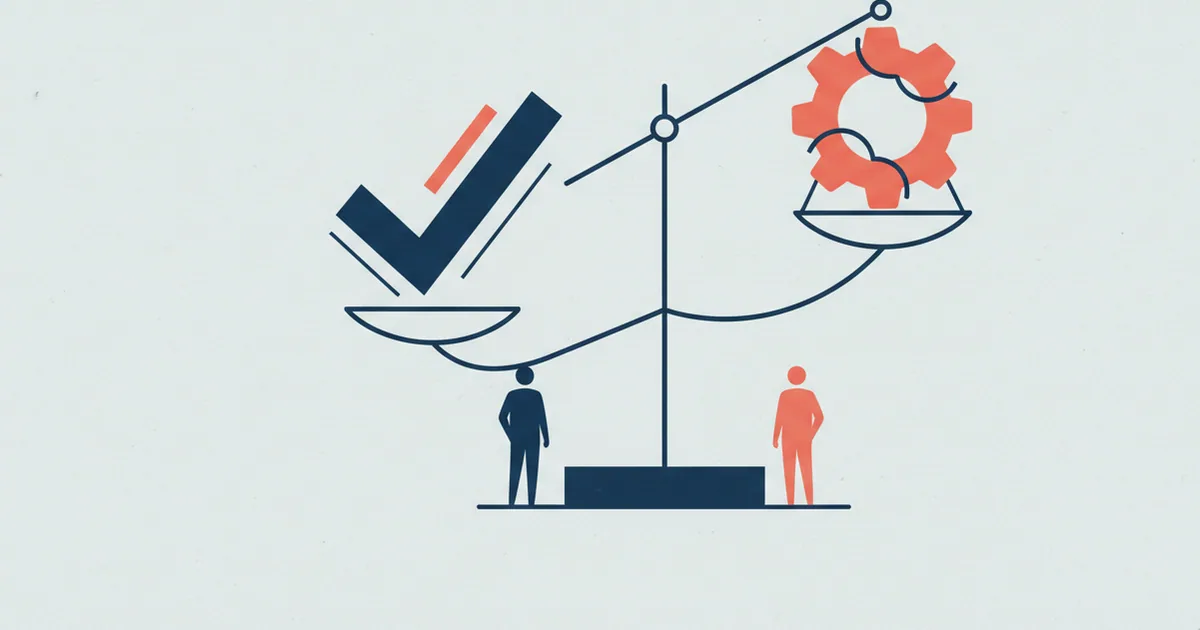
No AI tool is a universal fix.
Accuracy vs. autonomy. The more you let the AI handle without human review, the higher the hallucination risk. Tools with strict knowledge base grounding reduce this risk but may escalate more tickets than you expect. You will need to invest time building a comprehensive knowledge base upfront.
Setup time vs. flexibility. No-code tools let you launch in hours. The tradeoff is less customization. If your workflows are complex or your product catalog changes weekly, you will spend ongoing time maintaining the knowledge base. Tools with API access offer more flexibility but require developer resources.
Cost structure. Most AI tools charge by usage: messages processed, AI credits consumed. seats. or channels connected. A tool that looks cheap at low volume can get expensive as you scale. Understand what counts as a billable event.
Channel coverage. Some tools focus on website chat. Others add email. Telegram support is rarer but critical for MENA and Eastern European markets. If your customers prefer Telegram, make sure the tool actually supports it.
Multilingual support. English-first tools often handle Arabic and French poorly. If your customer base spans languages, test the AI's output quality in each language before committing. Grammar errors and awkward phrasing erode trust fast.
Where AI tools usually go wrong
The most common failure is overconfidence. The AI generates a plausible-sounding answer that is factually wrong. The customer believes it. You discover the error when they complain or request a refund. This happens when the AI is not properly grounded in source material or when the knowledge base has gaps.
The second failure is underinvestment in the knowledge base. Teams expect AI to work out of the box. It does not. The AI is only as good as the content you feed it. If your FAQ document is outdated or your product descriptions are vague, the AI will produce vague or outdated answers.
The third failure is ignoring escalation design. Teams set up the AI, turn it on. and forget to monitor escalated tickets. The AI sends complex cases to a queue that nobody checks. Customers wait longer than they would have without AI. Build the human handoff workflow before you launch.
The fourth failure is measuring the wrong metrics. Response time drops. Volume handled increases. But CSAT declines because the AI gives technically correct but unhelpful answers. Track resolution quality, not just speed.
Frequently Asked Questions
What makes an AI tool "hallucination-safe" for customer support?
A hallucination-safe AI tool restricts its responses to content from a verified knowledge base. It does not generate answers from general training data. When a query falls outside the knowledge base, the system escalates to a human instead of guessing. Look for tools that explicitly describe their grounding architecture. Terms like "retrieval-augmented generation" or "source-grounded responses" indicate this design. Test the tool with edge-case questions before deploying it to real customers.
How much does a typical AI support tool cost for a small e-commerce team?
Pricing varies widely. Entry-level plans from tools like Tidio or Freshdesk start around $29 to $49 per month for basic chatbot features. Mid-tier AI tools with knowledge base grounding and multichannel support typically range from $99 to $299 per month. Usage-based pricing can push costs higher at scale. Gawbni offers a free trial and subscription plans based on channels, seats. AI credits. and knowledge base size.
Can AI tools handle multilingual support in Arabic and French?
Some can. Many cannot. English-dominant tools often produce awkward translations or grammatical errors in Arabic and French. Look for tools that explicitly list multilingual support with native-quality output. Gawbni supports Arabic, French. and English with visible traction among MENA e-commerce teams. Test the AI's output in each language with real customer queries before going live.
How long does it take to set up an AI customer support tool?
No-code tools with pre-built integrations can launch in a few hours. The bottleneck is usually knowledge base preparation. If your FAQs, product descriptions. and policies are already documented clearly. setup is fast. If you need to write or update that content, budget a few days. Plan to review AI performance weekly for the first month and adjust escalation thresholds based on what you see.