
October 1, 2026 / 8 min read
What Is Rag In Ai: The Complete Guide for 2026
Learn everything about What Is Rag In Ai in this complete guide. Includes practical tips, examples, and expert insights. Read the full guide.

What Is Rag In Ai: The Complete Guide for 2026
RAG stands for Retrieval-Augmented Generation. It connects a large language model to external data sources so the AI pulls verified facts before generating a response. Instead of relying only on what the model memorized during training, RAG retrieves current. domain-specific information and cites it in real time.
Base LLMs hallucinate. They confidently invent facts when they lack knowledge. RAG fixes this by grounding every answer in documents you control. For merchants running customer support or sales teams fielding product questions, the difference between a hallucinating chatbot and a fact-checked AI agent is lost revenue versus closed deals.
Why RAG Matters for Business Applications

The core problem RAG solves is trust. A customer asks about your return policy. A base chatbot might guess based on patterns from its training data. RAG retrieves your actual policy document and quotes it. The answer is accurate. The customer converts.
According to IBM Research, RAG-based systems reduce hallucination rates by 30-50% compared to pure generative approaches when tested on knowledge-intensive tasks. Source: IBM Research Blog
E-commerce operators deal with thousands of product SKUs, shipping rules. promo codes. and order status inquiries. No language model can memorize all of that. RAG lets you upload your product catalog, FAQ documents. and policy PDFs. The AI retrieves the right snippet before answering.
Sales teams face a similar challenge. Prospects ask detailed pricing questions. They want specific feature comparisons. They need delivery timelines for their region. An AI sales agent powered by RAG can handle these conversations at 2am without making up numbers.
RAG also creates audit trails. When the AI retrieves a specific document chunk, you can see exactly which source informed the answer. This transparency matters for compliance, debugging. and building internal trust in AI tools.
How RAG Works in Practice
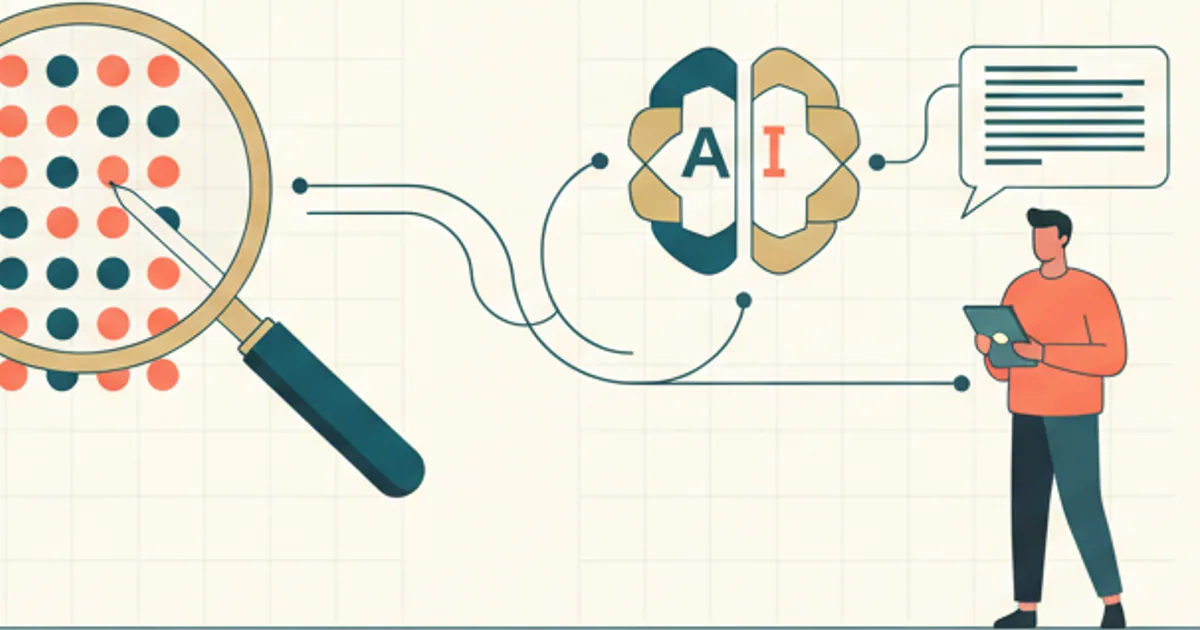
RAG operates in three phases: indexing, retrieval. and generation.
Indexing happens before any user query. You convert business documents into vector embeddings. These numerical representations capture semantic meaning. A sentence about "free shipping over $50" gets stored in a way that lets the system find it when someone asks "do you offer free delivery?"
Documents get chunked into smaller segments. A 20-page product manual becomes hundreds of retrievable snippets. Each chunk gets embedded and stored in a vector database. Popular options include Pinecone, Weaviate. and Chroma.
Retrieval happens when a user asks a question. The system converts that question into the same vector format, then searches the database for semantically similar chunks. If someone asks about your warranty policy, the system retrieves the specific paragraphs about warranties. Most RAG systems retrieve 3-10 chunks depending on query complexity.
Generation is where the LLM does its work. Retrieved chunks get injected into the prompt as context. The model sees the user question plus relevant documents. It generates a response grounded in that specific context.
The prompt might look like this internally: "Based on the following policy documents [retrieved chunks], answer the customer's question: [user query]. Only use information from the provided documents."
For teams exploring AI tools that implement this pattern, the key differentiator is how well the system handles document ingestion and chunk retrieval. Some platforms call this a "Truth Layer" because it creates a verified foundation the AI cannot contradict.
Tradeoffs to Understand First
RAG is not magic. Every architectural choice has costs.
Retrieval quality bottlenecks everything. If the system retrieves irrelevant chunks, the LLM generates wrong answers with high confidence. Your chunking strategy, embedding model. and similarity threshold all affect retrieval quality.
Latency increases. A pure LLM call might take 500ms. RAG adds a retrieval step. Now you are looking at 800ms to 2 seconds depending on database size. For real-time chat, this is usually acceptable. For high-frequency API calls, it might not be.
Document freshness requires maintenance. RAG only knows what you feed it. If your pricing changes and you forget to update the knowledge base, the AI quotes old prices. Someone owns the knowledge base.
Context window limits matter. Even with RAG, the LLM can only process so much text at once. If retrieval returns 10 long chunks exceeding the context window, the system must truncate.
Cost scales with usage. Every query involves embedding generation, vector search. and LLM inference. The best free AI tools often cap usage or degrade retrieval quality at scale.
The tradeoff worth emphasizing: RAG trades absolute creativity for factual grounding. For customer support, this constraint is exactly what you want. For creative writing, it might not be.
Where RAG Usually Goes Wrong
Most RAG failures trace back to poor implementation rather than architectural flaws.
Bad chunking. Teams split documents by arbitrary character counts. A chunk ends mid-sentence. Context gets lost. The fix is semantic chunking that respects paragraph boundaries.
Missing metadata. A chunk about "shipping" from your 2023 policy looks identical to one from your 2025 update. Without metadata filtering, the system might retrieve outdated information. Timestamp your documents. Tag them by category.
Retrieval without verification. The system retrieves chunks but does not verify they actually answer the question. A user asks about return windows. The system retrieves a chunk mentioning "returns" but discussing return labels, not timeframes. Implement relevance scoring and thresholds.
Over-reliance on embedding similarity. Semantic search is powerful but imperfect. "How do I cancel my order?" and "Can I modify my order?" are semantically similar but might require different policy sections. Hybrid search combining keywords and vectors often performs better.
No escalation path. RAG reduces hallucinations but does not eliminate them. When the knowledge base lacks an answer, the system should escalate to a human instead of guessing. The best AI chatbot implementations include confidence thresholds that trigger handoffs.
Teams building on RAG should instrument their retrieval pipeline. Log which chunks get retrieved for each query. Review cases where users reported wrong answers.
Knowledge Base Governance

The biggest mistake is treating RAG as a one-time setup. You upload documents, configure the system. and walk away. Six months later, half your product catalog has changed. The AI still references discontinued items.
Someone needs to own knowledge base governance. They need a process for updating documents when policies change. They need alerts when retrieval quality degrades.
RAG excels at routine questions with clear answers in the knowledge base. It struggles with ambiguous situations, emotional customers. and edge cases. A good implementation uses RAG for first-draft responses. Human agents review and send. Over time, more responses go out automatically. But the escalation path always exists.
For teams evaluating what is agentic AI versus simpler RAG systems, the key distinction is autonomy. RAG retrieves and generates. Agentic systems can also take actions, make decisions. and chain multiple steps. RAG is often the right starting point.
Frequently Asked Questions
What is the difference between RAG and fine-tuning?
Fine-tuning modifies the model's weights by training it on your data. The knowledge gets baked into the model itself. RAG keeps the base model unchanged and retrieves external data at query time. Fine-tuning is better for style and behavior changes. RAG is better for factual accuracy and frequent content updates. You can combine both approaches.
How much data do I need for RAG to work well?
RAG can work with surprisingly little data. A single FAQ document with 50 questions is enough to see value. Quality matters more than quantity. Ten well-structured policy documents outperform a thousand poorly formatted PDFs. Start with your most common customer questions and the documents that answer them.
Does RAG eliminate AI hallucinations completely?
No. RAG significantly reduces hallucinations but does not eliminate them. The LLM can still misinterpret retrieved context or fill gaps with generated text. The best implementations add verification layers, confidence scoring. and human review for uncertain cases. Think of RAG as reducing hallucination risk from 30% to 5%, not from 30% to zero.
What types of documents work best with RAG?
Structured documents with clear sections perform best. FAQs, policy documents. product specifications. and help center articles are ideal. Unstructured content like meeting transcripts requires more preprocessing. PDFs with complex layouts need OCR and formatting extraction. Most free AI tools handle common formats like PDF, DOCX. and TXT out of the box.
Can RAG work with multiple languages?
Yes. Modern embedding models support multilingual content. You can index documents in Arabic, French. and English in the same knowledge base. The system retrieves relevant chunks regardless of language and generates responses in the user's preferred language. This is particularly valuable for e-commerce businesses serving multilingual customers.